North Cyprus IVF Clinic was established in 1998 and became a fully functional infertility treatment hospital in 2000. North Cyprus IVF has been a pioneer in fertility treatment as it has been the very first IVF clinic in North Cyprus, the very first clinic to offer donation services and gender selection for family balancing.
Intra-Uterine Insemination (IUI) is a non-invasive, as well as a low
cost fertility treatment among many fertility treatment options offered
at North Cyprus IVF. The main purpose of this treatment is to catch a
higher possibility of fertilization through increasing the number of
sperms that reach the fallopian tubes.
Mostly, couples with below indicated conditions prefer IUI;
Low sperm count.
Decreased sperm mobility.
Requirement of donor sperm.
A hostile cervical cases such as cervical mucus being quite thick
Sexual dysfunction
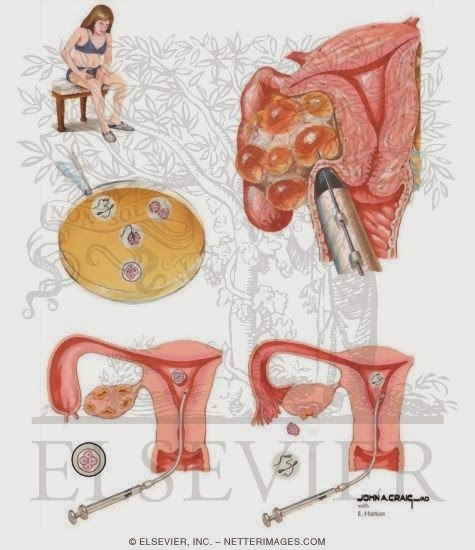
Simply put, it is the placement of a number of washed sperm directly
into the uterus with the use of a catheter. Lab processes a semen sample
and dispatches the sperm from the seminal fluid while the development
of follicles are observed through a number of sonograms. Once the
follicles reach the ideal level of growth, human Chorionic Gonadotropin
(hCG) is injected in order to stimulate the release of eggs from the
follicles. After 35 hours of this injection, processed sperm is injected
into the uterus with a catheter.
This treatment increases the number of sperm cells that are put in the
uterus and therefore brings a higher probability of conception.
The chances of success will depend on a number
of factors. These include your age, your hormone levels and general level of
fertility as well as your husband's semen characteristics and other factors
like the equipment used, doctors' experience and choice of medication. So it is
really misleading to quote a success statistics in general or based on just
your age. However, the age based statistics we publish on our website more or
less provides an idea of what you will be looking at. However, your individual
hormone profile and your ovarian reserves are the most important determinant of
how likely you are to achieve success. Patients up till mid-30s usually have a
very good chance of getting pregnant on the first attempt as long as they have
an ovarian reserve and a hormone profile in line with their age. Above the age
of 35, the level of fertility declines and the chances of success start to
diminish.
In some cases, when we are able to obtain a good
count and quality of eggs, we end up having multiple embryos of desired sex and
if there are more embryos than required for the given transfer cycle, we are
able to preserve the ones that will not be used in the current cycle. This
gives you a chance to use these preserved embryos at a future date without
having to go through the entire treatment again.
Please note that the dosages and medication will be adjusted for each individual based on hormone results and age.
Cycle Day 1 - Let us know and start taking 1 tablet of Pregnacare per day. Cycle Day 2 - Start taking 1 Clomid in the morning and 1 at night for 5 days. Cycle Day 7 - Follicle tracking scan is done and we are informed of the results. You will start with 150IU (1/4 of a vial) GonalF injections. Cycle Day 13 - First appointment at the clinic. If the follicles have reached 18mm, you will have the trigger injection Cycle Day 15 - Microsort with IUI (you can leave Cyprus)
IUI (intrauterine
insemination) treatment is generally recommended for patients in their 20’s who
prefer a non-invasive alternative to IVF.
A mild dose of medication is prescribed for
ovulation in order to increase the number of eggs that are produced. The male
sperm is then sorted into X and Y with the Microsort procedure and inserted
into the uterus once the eggs have matured and are ready for fertiization.
This method is 90% accurate for female and 75%
accurate for male offspring.
As the eggs are not retrieved from the female,
there is no biopsy or genetic testing performed to ensure 100% accuracy.
The success rates for IUI are about 5-30%
depending on the age of the female and multiple tries might be required until
pregnancy is achieved.
IVF which is the common term for In Vitro
Fertilization, is the process of creating an embryo using the egg and sperm in
a laboratory environment. Once the embryos have been formed, the embryo
transfer is physically placed in the uterus.
Here is the step by step process of the
procedure:
Before embarking on the IVF procedure, we ask
that you have some initial hormone test results for evaluation. These tests are
FSH, LH, E2 and Prolactin and are normally done between day 2-4 of the
menstrual cycle. An alternative
test would be the AMH which can be done on any day of the cycle.
Once you are considered a qualified candidate,
the process can begin.
The first step is to begin with the ovulation
induction with the assistance of fertility medications to control the timing
and mutliple growth of the egg. The medication regimen will depend on each
individual case and will be prescribed accordingly.
In order to shorten the stay in Cyprus, we
monitor your medication intake to ensure good development of the follicles.
Beginning the medication protocol in your home country will help keep you visit
in Cyprus to 6-7 nights.
Egg retrieval is done upon arrival in Cyprus
with the assistance of ultrasound imaging that guides the hollow needle through
the pelvic cavity. In order to increase your comfort, light sedation and local
anesthesia are used during this process. The eggs are removed by follicular
aspiration.
At the same time that the eggs are collected,
the sperm is also collected from the male partner. This is generally done via
ejaculation but if there are any problems with it there are procedures that can
be used to extract the sperm manually.
Insemination is the name of the process where
the eggs and sperm are placed in incubators for the fertiliztion to occur. Most
times however, ICSI (intracytoplasmic sperm injection) is used for greater
accuracy of fertilization.
The fertilized eggs are then monitored for 3
days until they have grown enough for the embryo transfer.
During the final stage of the process which is
the embryo transfer, a speculum is inserted into the vagina in order to expose
the cervix. 2-3 embryos are then suspended in fluid and gently placed in the womb
through a catheter. This process is also guided by ultrasound in order to
confirm accuracy of embryo placement. 10-12 days after the embryo transfer the
patient is asked to undergo a blood test in order to find out if the
fertilization process was successful.
We're pleased to say that everything went well for our transfer on Sunday and now we're prepared for the 'big 2 week wait'!!
The Doctors were very nice and we were really pleased with their treatment and with all the staff and the clinic itself. I would recommend them regardless of the outcome, but we have fingers crossed that this is the last time we have to try.
FIV avec la sélection du sexe et du DPI MicroSort fonctionne en deux phases. Premièrement, le sperme du partenaire masculin est trié dans ceux qui produisent des descendants masculins et féminins à travers la procédure MicroSort. Le sperme MicroSort est utilisé pour fertiliser les œufs qui sont récupérées à partir d'ovaires de la partenaire féminine à la fin du processus d'induction de l'ovulation. Puis, les embryons sont placés dans un incubateur pour une croissance optimale. Une fois les embryons atteignent les 8 cellules stade de croissance (généralement 3 jours après la fécondation), la biopsie est réalisée d'une seule cellule, où sont extraites de chaque embryon pour le diagnostic. Cette biopsie permet de tester pour certaines pathologies génétiques et de déterminer le sexe. Mis à part le sexe du bébé, nous testons les chromosomes X, Y, 13, 18 et 21, qui sont les causes de près de 90% de toutes les anomalies génétiques liées, telles que le syndrome de Down. Notre clinique est la seule clinique dans le nord de Chypre avec un laboratoire en interne DPI, afin que tous nos biopsies sont projetés dans les locaux.
MicroSort pour la sélection du sexe avec un traitement de FIV a une précision de 90% pour la sélection du sexe pour une fille et une précision de 75% pour la sélection du sexe pour un garçon. En ce qui concerne les taux de réussite, la FIV a MicroSort taux de réussite comparables à des taux de réussite du traitement de FIV. Pour les patients cherchant sans risque des méthodes de sélection du sexe avec une précision de 99,9%, puis avec le DPI MicroSort est recommandée. Cette option permet aux couples de maximiser la quantité d'embryons qu'ils ont de sexe désiré où il leur donne aussi 99,9% de précision pour la sélection du sexe ainsi que le dépistage génétique.
Par où commencer?
La première étape du traitement est de voir votre gynécologue local pour une échographie (échographie). Ceci est pour s'assurer que la partenaire féminine est n fibromes majeurs, des polypes dans l'utérus, ou des kystes dans les ovaires, ou rien en général, qui peuvent potentiellement interférer avec une grossesse réussie.
Le traitement initial s'effectue très facilement avec un tableau de traitement, nous vous fournirons en fonction de votre identification. Il ya quelques tests que j'ai mentionnés ci-dessous, qui nous aidera à identifier votre propre profil hormonal unique et nous permettent d'arriver à un tableau de traitement, qui est adapté à votre propre profil. Ce tableau de traitement contiendra l'utilisation des médicaments quotidiennement, ainsi que d'un calendrier pour vos rendez-vous médecin. Tout sera clair une fois que nous savons quel type de protocole à suivre. Une fois que nous sommes en mesure de vous fournir un tableau, on peut alors effectuer les travaux préliminaires par e-mail et de communication de téléphone à la fois avec vous et votre gynécologue. Une fois le travail préliminaire effectué, vous aurez besoin pour venir à Chypre pour une semaine environ. Si vous êtes capable de rester un peu plus, disons 10-12 jours, il serait plus commode pour que nous puissions faire une partie du échographiques ici et arriver à suivre vos progrès de plus près.
Pour les patients qui ont conçu des enfants avant, nous ne requièrent pas de tests d'infertilité. Cependant, nous aurons besoin de résultats de tests infectieuses maladies avant que nous puissions effectuer le transfert d'embryon ici. Vous pouvez soit les faire faire là-bas ou ici une fois que vous arrivez à notre clinique. C'est juste pour s'assurer que nous ne passons pas toutes les maladies infectieuses sur le nouveau-né.
Ces tests de maladies infectieuses sont les suivantes:
Pour Femme Pour Partner partenaire de sexe masculin
Anti-VIH anti-VIH
Anti-VHC anti-VHC
HbsAg HbsAg
VDRL VDRL
Rubéole IgG
CMV IgG
Chlamydia
Cependant, même si vous n'avez pas toute l'histoire de l'infertilité, nous serons en mesure de prendre une décision plus éclairée concernant votre utilisation de médicaments et la dose du médicament pour
être administré en observant les résultats de votre test hormonal à faire sur le 3ème jour du cycle menstruel (FSH, LH, E2 et tests de PRL). Ceci est particulièrement important pour les patients ayant dépassé l'âge de 32 ans.
Obtention des médicaments et le traitement initial
Nous serons en mesure de vous envoyer une copie scannée de votre prescription fois que nous voyons certains résultats de tests et d'identifier le bon mode de traitement. Vous pouvez utiliser cette ordonnance à la pharmacie internationale que nous travaillons. La pharmacie est en mesure de livrer dans le monde entier, et ne sont des prix raisonnables.
Avec les médicaments que vous achetez, vous serez en mesure d'avoir votre travail préliminaire au niveau local sous notre supervision et avec les conseils de votre gynécologue local. À la fin de ce processus, il vous sera demandé de se rendre à Chypre pour 7 jours.
Voyager à Chypre
Notre clinique est située à Nicosie, Chypre du Nord. L'aéroport le plus proche de notre clinique est de l'aéroport d'Ercan. Tous les vols vers l'aéroport d'Ercan passent par l'une des villes en Turquie, il n'y a pas de vols directs. La voie la plus directe dans Ercan serait de voler à travers Istanbul.
Une autre alternative est l'aéroport de Larnaca dans le Sud. Il est situé à environ 60 km au sud de notre clinique, et prend environ une heure à voyager. Parfois, les vols à destination de Larnaca peut être beaucoup moins cher, selon la saison, donc vérifier les deux aéroports sera logique avant de réserver vos vols.